Learn a simple, three-step method to rewire the nervous system and heal the root causes of chronic pain by restoring safety and reducing fear and sensitivity.
Chronic pain isn’t due to tissue damage; it’s caused by a hypervigilant and hypersensitive nervous system. Pain changes the brain, but the good news is that the same neuroplastic qualities that create pain pathways can also be used to restore resilience. Learn how Pain Neuroscience Education can help you retrain your brain and heal chronic pain.
Although acute pain, nerve pain, and chronic pain all have different root causes, our medical system often treats them all the same leading to misdiagnosis and unnecessary suffering. Learn about the differences between nociceptive, neurogenic, and neuroplastic pain so that you can receive the most effective diagnosis and treatment to alleviate your pain.
If you have persistent pain but do not have a clear diagnosis, despite seeing multiple doctors and having multiple tests, your pain may be due to nervous system sensitivity. Discover the signs of central sensitization and nervous system-driven pain, plus how to find lasting relief with trauma-informed, integrative therapies.
Learn the foundations of pain science and why understanding pain reduces the threat level and is essential to healing.
Did you know that your gut has its own nervous system, called the enteric nervous system, that is kind of like a second brain? The enteric nervous system has as many nerve cells as the spinal cord, and in collaboration with the gut microbiome, produces neurotransmitters that influence mood, immune function, hormone release, digestion, and pain. The enteric nervous system and the brain communicate with each other via the vagus nerve about things like nausea, hunger, fullness, emotion, discomfort, and danger. In other words, the gut and the brain are interconnected, which is why can get a stomachache when we are stressed, or get anxious when we are constipated. It is also why our digestion is affected when we are in pain, and why supporting a healthy gut is important in unraveling persistent pain.
We have a real problem with our medical system right now. Doctors rely on lab tests and imaging for diagnosis, but the diagnostic tests aren't sensitive enough to detect issues at the early stages. Patients are often told to just come back if it gets worse, and unfortunately, that is exactly what happens. The consequence is that it teaches us to ignore our pain and override our body's built-in protective mechanism.
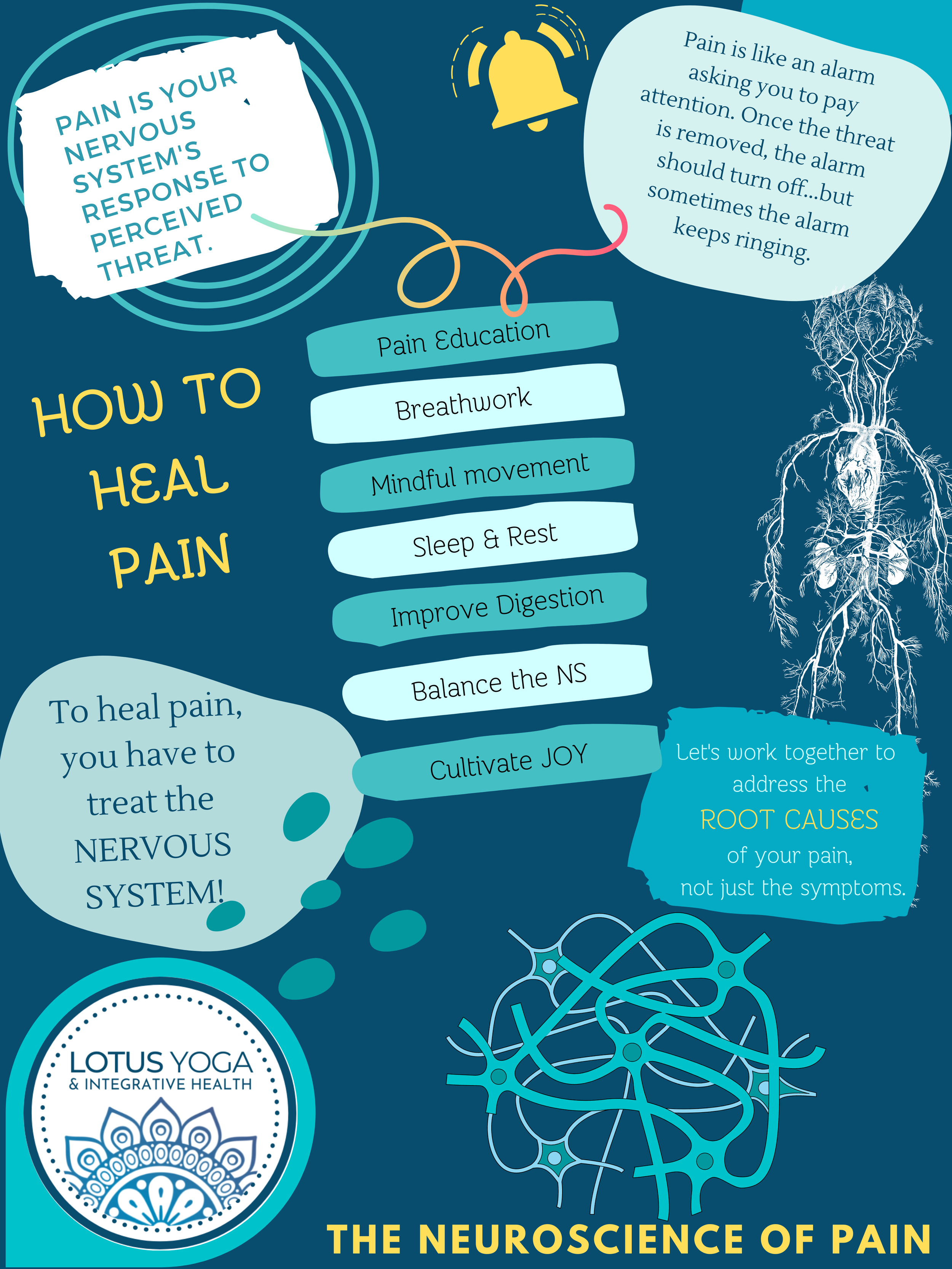
Pain is your nervous system’s response to the perception of threat. The first step to reducing pain is understanding it. Explaining pain reduces the perception of threat, which reduces pain. As pain comes down, function improves. The next step is to figure out your triggers, and build up your toolbox to help you manage those triggers. As you balance your life, you will start to balance your pain.